Driveway power washing with sustainability at the core
Our driveway power washing and drive-way power washing service is designed not only to deliver spotless surfaces but to protect the environment through an eco-friendly waste disposal area and a thoughtfully planned sustainable rubbish gardening area. We combine traditional driveway cleaning and modern power wash driveways techniques with circular-economy thinking: materials recovered during cleaning are separated, reused, or recycled wherever possible. This page explains how we manage waste, our recycling targets, local transfer station links, charity partnerships and our low-carbon van strategy.Keeping a clean driveway need not mean adding to landfill. Our approach to driveway pressure washing keeps water and solids contained, then directs residues to our designated settling and treatment area. In that area we sort sediment, pavers, metal fragments, organic debris and recyclable packaging. We operate a dedicated sustainable rubbish gardening area where organic material is composted or used as mulch for local green spaces, while non-organic materials are assessed for repair, reuse, or recycling. Every stage is tracked to maximise material diversion from landfill.
How we separate and process waste — adapting boroughs’ approaches
Many boroughs now encourage a multi-stream separation system: food waste, garden waste, mixed dry recyclables and residual waste. We take inspiration from this and apply a four-stream model on-site during all power washing and driveway power-wash jobs. Our practices include:- Source separation of organic matter for composting or community gardens.
- Capture and filtration of wash water so solids and oils are removed before disposal.
- Segregation of construction debris such as broken paving or driveway aggregate for re-use or drop-off at transfer stations.
We set a clear recycling percentage target for each project: our current target is to achieve at least 80% material diversion (by weight) from landfill within 12 months of job completion. This target covers organic matter, masonry, metals, plastics, and glass recovered during driveway cleaning and related site clearance. We audit each job and publish anonymised diversion figures so our team can refine processes and reach higher recovery rates.

Local transfer stations and responsible disposal
We work closely with local transfer stations and municipal recycling centres to make sure materials we cannot reuse locally are handled responsibly. Typical transfer and waste hubs we coordinate with include borough transfer stations, municipal recycling centres and regional waste hubs. These facilities accept separated streams and enable downstream recycling and energy recovery where appropriate. By routing materials to the correct local transfer stations we reduce double-handling and unnecessary transport emissions.Practical on-site measures include containment booms and silt traps to protect storm drains, and portable sediment tanks to settle solids from wash water. When contaminants are detected we route effluent to licensed waste water treatment at authorised transfer stations rather than the sewer. Our adherence to borough and regional waste requirements ensures compliance with local waste separation policies and helps local authorities meet recycling targets.
Our partnerships with charities and community groups form a cornerstone of the reuse strategy. We collaborate with local reuse charities, community allotments and social enterprises to give new life to materials recovered during a power wash driveway or driveway cleaning job. Items such as intact pavers, edging stones, planters and metal fittings are offered to partner organisations for use in community projects, donated to skill-building workshops, or sold through community reuse networks.
 To reduce transport emissions we operate a fleet of low-carbon vans and continually invest in route optimisation and load consolidation. Our low-carbon vans include battery-electric models and hybrids for short urban hops, combined with telematics for efficient routing. By organising rounds to serve multiple nearby properties, and by scheduling drop-offs at transfer stations and charity partners on the same trip, we minimise fuel use and overall carbon footprint. We also monitor and report fleet emissions as part of our annual sustainability review.
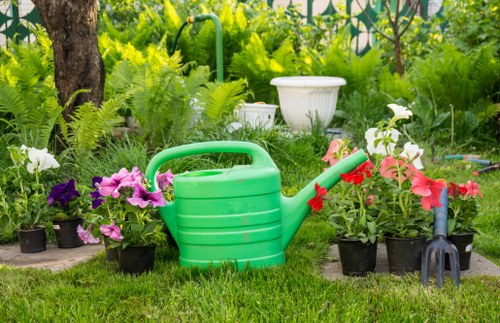 In the sustainable rubbish gardening area we prioritise on-site solutions: composting green waste from driveways and nearby hedges, converting wood debris to mulch for landscape restoration, and reusing stone and aggregate for local permeable paving. This reduces the need for virgin materials and keeps the embodied carbon of landscaping projects low. We provide clear signage and labelled bays on site so materials destined for compost, reuse, recycling or transfer stations remain uncontaminated and ready for their next life.
Operational transparency is key. For every drive-way power washing job we provide a waste-handling summary that documents the streams collected, the percentage recycled or reused, and the transfer stations or charity partners that received materials. Our aim is to inspire confidence that driveway power washing can be low-impact and contribute positively to local circular economies.
We adapt our approach to local borough policies — in boroughs emphasising food and garden waste collection we prioritise compost routing; in areas with strong masonry reuse networks we focus on reclaiming paving and stone. By aligning with municipal separation schemes and local transfer station capabilities we create a seamless flow from driveway cleaning to beneficial reuse or recycling.
Finally, our commitment extends beyond individual jobs: we continually review recycling percentage targets, expand charity partnerships, and refresh our fleet with newer, cleaner vehicles. Whether described as driveway power washing, driveway pressure washing, power washing driveways or simple driveway cleaning, our promise is the same: clean surfaces, responsible waste management, and practical, local sustainability that supports borough waste goals and community green spaces.